
: +86 13827058066

Views: 0 Author: Site Editor Publish Time: 2025-12-17 Origin: Site


Home security has evolved dramatically over the last decade. Gone are the days of fumbling for keys in the dark or worrying about who has a spare copy. Today, biometric technology offers a seamless blend of convenience and safety, and at the forefront of this revolution is the China smart fingerprint lock industry.
If you are upgrading your home security or managing a rental property, you might be wondering why products from this specific region are dominating the market. From cutting-edge features to competitive pricing, Chinese manufacturers are setting new standards in the smart home sector. This guide explores the technology, benefits, and key considerations for choosing the right smart lock for your needs.
A China smart fingerprint lock refers to a biometric door lock manufactured by Chinese tech companies, which are currently global leaders in smart home hardware. These devices utilize semiconductor fingerprint sensors—similar to the one on your smartphone—to grant access.
However, these locks are rarely just about fingerprints. They typically serve as comprehensive access control systems. When you purchase a smart lock from a reputable Chinese manufacturer, you are usually getting a "5-in-1" or even "7-in-1" unlocking mechanism. This versatility ensures that you are never locked out, even if a battery fails or a sensor is dirty.
Common unlocking methods include:
· Biometric Fingerprint: The primary and fastest method (usually under 0.5 seconds).
· PIN Code: With anti-peeping technology (entering random numbers before/after the real code).
· RFID Card/Tag: Great for elderly family members or employees.
· Mobile App: Unlock remotely via Wi-Fi or Bluetooth (Tuya and TTLock are industry standards).
· Mechanical Key: A backup fail-safe required by security regulations.
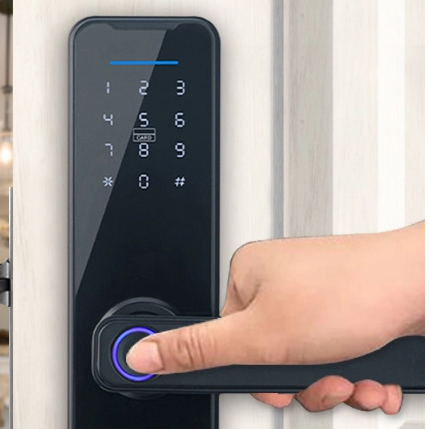
The dominance of the China smart fingerprint lock market isn't accidental. It stems from a massive domestic demand that has driven rapid innovation and cost efficiencies.
Chinese manufacturers like Xiaomi, Kaadas, and various OEM factories have integrated features that Western competitors often sell as premium add-ons. For instance, many standard models now come with built-in Wi-Fi bridges, meaning you don't need to buy a separate hub to connect the lock to the internet. Furthermore, the integration of 3D facial recognition and video doorbell functionality directly into the lock body is becoming standard in high-end Chinese models.
Perhaps the most compelling argument is value. Due to robust supply chains in Shenzhen and surrounding areas, a China smart fingerprint lock often offers the same (or better) build quality and feature set as a US-branded lock but at a fraction of the price. This makes smart security accessible to average homeowners, not just tech enthusiasts.
Most smart locks from China are built to work with universal platforms like the Tuya Smart App or the TTlock App. This is a significant advantage because it prevents "app clutter." You can control your lights, cameras, and your new fingerprint lock all from a single interface, regardless of the brand.
To help you understand where the China smart fingerprint lock stands against traditional options, here is a comparison of features commonly found in the market.
Feature | Standard Mechanical Lock | Basic Keypad Lock | China Smart Fingerprint Lock |
Primary Access | Physical Key | PIN Code | Biometric (Fingerprint) |
Security Level | Low (Keys can be copied) | Medium (Codes can be shared) | High (Unique biological data) |
Convenience | Low (Must carry keys) | Medium (Must remember code) | High (One-touch access) |
Remote Access | None | Limited | Yes (via App/Wi-Fi) |
Guest Access | Give physical key | Share static code | Generate temporary/one-time codes |
Audit Trail | None | None | View entry logs in App |
Battery Life | N/A | 6-12 Months | 6-12 Months (with low battery alerts) |
Not all smart locks are created equal. If you are importing or purchasing a China smart fingerprint lock, pay close attention to these specifications to ensure you are getting a high-quality product.
Always look for a lock that uses a semiconductor sensor (also known as a capacitive sensor).
· Optical sensors take a photo of your fingerprint. They are older technology, slower, and can sometimes be fooled by high-quality images.
· Semiconductor sensors use electrical current to map the ridges of your fingerprint. They are faster, more secure, and work better with live tissue, making them difficult to spoof.
This is the most technical but crucial part of the purchase. The mortise is the mechanism inside the door.
· 6068 Mortise: This is the standard size for many Chinese locks and fits many security doors.
· Single Latch (Deadbolt): Common in the US and Europe. If you are retrofitting a standard American door, ensure the manufacturer offers a "deadbolt" version, or you may need to drill new holes in your door.
Look for Zinc Alloy or Aluminum Alloy construction. These materials are durable and resistant to corrosion. Some premium models also feature tempered glass panels for a sleek, scratch-resistant finish.
Smart locks run on batteries (usually AA or rechargeable Lithium-ion). But what happens if the battery dies while you are outside? A well-designed China smart fingerprint lock will have a USB-C or Micro-USB port on the exterior panel. This allows you to use a portable power bank to temporarily power the lock and gain entry.
Installing a smart lock can be a DIY project if you are handy with tools, but precision is key.
Installation:
1. Measure Twice: Check your door thickness. Most locks fit doors between 35mm and 55mm thick. If your door is thinner or thicker, you may need special screws or spindles.
2. Check the Handing: Some locks are "universal," meaning the handle can be reversed for left or right-handed doors. Others must be ordered specifically for your door direction.
3. Cable Care: When connecting the front and back panels, be extremely careful not to pinch the data cable. A damaged cable is the #1 reason for installation failure.
Maintenance:
· Clean the Sensor: Wipe the fingerprint reader gently with a dry cloth periodically. Oil and dust can affect reading speed.
· Battery Management: Use high-quality alkaline batteries (like Duracell or Energizer) to prevent leakage. If using a Lithium battery pack, charge it fully before the first use.
Security is the primary function of a lock, and skepticism about digital security is healthy.
Reputable manufacturers use AES128 encryption for data transmission between the lock and the app, which is the same standard used by banks. Furthermore, the fingerprint data is usually stored locally on the chip inside the lock, rather than in the cloud, minimizing the risk of remote hacking.
However, physical security matters too. Look for locks that feature "C-grade" lock cylinders (the highest standard in China) which are extremely difficult to pick mechanically. Additionally, "Anti-Cat Eye" switches are a common feature on these locks—a small button on the inside handle that prevents the door from being opened by a tool inserted through the peephole.
Investing in a China smart fingerprint lock is about more than just a gadget; it is about upgrading your lifestyle. It removes the friction of daily entry, provides peace of mind through activity logs, and allows you to manage access for friends, family, or service workers instantly.
With a perfect balance of advanced biometric technology, robust app ecosystems, and affordable pricing, these locks represent the future of residential security. Whether you are a homeowner looking for convenience or a business owner securing an office, the wide range of options available ensures there is a perfect match for your door.


